
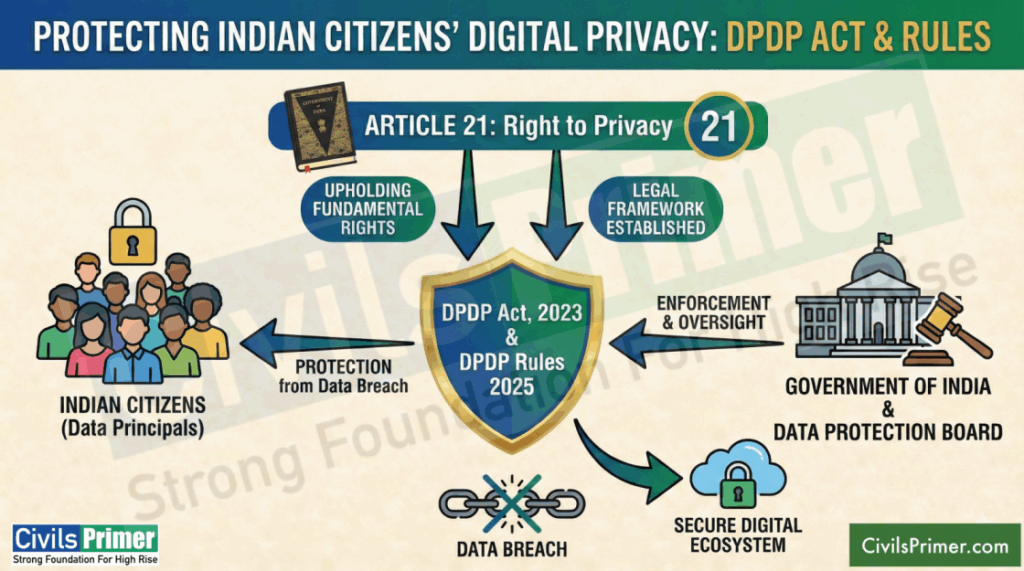
DPDP Act and Rules UPSC News Analysis

Digital Personal Data Protection (DPDP) Rules, 2025: Decoding for UPSC Mains

Quick Summary: The Digital Personal Data Protection (DPDP) Rules, 2025 (notified 14 Nov 2025) operationalise the Digital Personal Data Protection Act, 2023 — creating a rights-centric framework (consent, access, correction, erasure), a Data Protection Board, breach-notification rules and phased compliance timelines. Why UPSC candidates should care? (Syllabus Link): GS II (Polity & Governance): privacy as fundamental right (Puttaswamy Judgement), RTI interface, administrative adjudication (Data Protection Board), rule-making and executive power. GS III (Internal security / S&T / Economy): data governance, cyber-security obligations, impact on digital economy & AI/data-driven industry. Ethics & Essay: rights vs. state/market tradeoffs; accountability, transparency, checks &…

RBI’s Draft ECB Framework 2025: Key Reforms, Liberalization Measures | External Commercial Borrowings

Syllabus Topic: GS3 - Economy The ECB framework has been in the news recently due to significant, proposed rationalization and liberalization measures announced by the RBI, primarily based on the Draft ECB framework released in October 2025, building on the foundation of a strengthening external sector. External Commercial Borrowings: Basics Explained for UPSC Prelims and Mains External Commercial Borrowings (ECB) refer to commercial loans availed by eligible resident entities in India from recognized non-resident lenders. These are a vital source of external financing for the Indian economy, complementing Foreign Direct Investment (FDI) and Foreign Portfolio Investment (FPI). Governing Act &…

Mutual Funds: SEBI’s Proposal on Performance-Based Charging

UPSC CSE Syllabus Link: GS III - Economy | (Open-ended vs. Close-ended Mutual funds) What is Mutual Fund? A mutual fund is like a big pot of money collected from many investors (like you and me). This money is managed by professionals (Asset Management Companies, or AMCs) who invest it in stocks, bonds, etc. Open-ended Mutual Funds These are the most common type in India. They allow investors to buy or sell units anytime (except weekends/holidays). The price is based on the NAV (Net Asset Value), which changes daily. There is no fixed maturity period. Example: If you invest in…